


In Merida (Mexico, Yucatan) there is a monument to the Russian historian, ethnographer and linguist Yuri Knorozov, who deciphered the Mayan hieroglyphic script and initiated the study of Mesoamerican civilizations. The opening of the monument was attended by an associate professor of the Southern Federal University Irina Savchenkova.
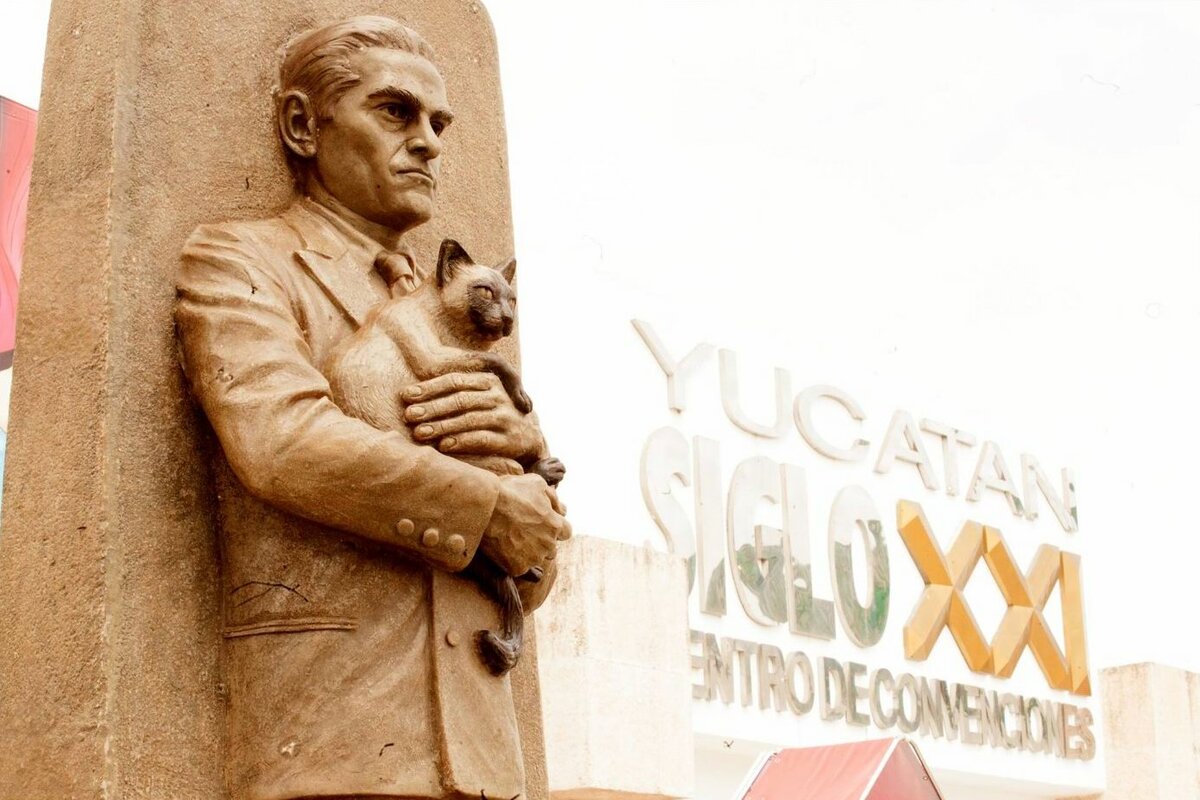
Аcquaintance with pre-Columbian America in many ways would have been impossible without the discovery of Yuri Knorozov.

At the University, Knorozov translated from Old Spanish into Russian "A Message about the affairs in Yucatan", a book about the life of the Maya during the Spanish conquest, which was written in 1566 by the Franciscan monk Diego de Landa. It is believed that de Landa's book was based on the works of an Indian with a European education named Gaspar Antonio Chi. Knorozov guessed that the Indian did not write down sounds with Maya signs, but the names of Spanish letters, and that the alphabet of 29 characters in the "Message" was the key to deciphering incomprehensible letters.

Knorozov had three rather long Maya manuscripts in his hands. He calculated that there are only 355 independent signs in them, that is, the writing is syllabic, or rather phonetic. This did not contradict either the works of his predecessors or the records of Diego de Landa.

Using Landa's alphabet as a key, Knorozov was able to read some of the signs. Over time, there were more and more readable signs, but this was just the beginning. Then it was necessary to master the font and the individual handwriting of the Maya scribes in order to recognize all the variants of writing hieroglyphs, even half-erased and distorted. After that, Knorozov divided the roots and the rest of the words, and then analyzed how often the signs are repeated and how they are combined — this made it possible to identify the service words, the main and secondary members of the sentence.

Short link to this page sfedu.ru/news/70328


