


Kupala bonfires, wreaths on the water, the search for a fern flower — it seems that these rituals should have been a thing of the past long ago. The digital age has given folk culture a new lease of life. Today, Ivan Kupala has become one of the most recognizable summer holidays, folk aesthetics is becoming a trend, and interest in traditional culture goes far beyond museums and folklore festivals.
In recent years, folk culture has become a prominent part of modern daily life. Russian folk motifs appear in fashion, design, music, cinema and even the wedding industry. Conceptual weddings in the Russian style are becoming increasingly popular. Designers use elements of folk costume, khokhloma, gzheli and other traditional crafts in their collections. Videos featuring Russian folk dances from famous ensembles, songs and stylized images are gaining millions of views on social networks, and the trend of slavic core (approx. A popular fashion and aesthetic trend inspired by the cliched image of a wealthy Slavic woman. It combines national flavor, post-Soviet aesthetics, elements of folklore and the glamour of the 2000s) has long gone beyond the boundaries of online communities.
According to Irina Zabubenina, PhD in Philosophy and senior lecturer at the SFedU Department of Cultural Theory, Ethics and Aesthetics, such interest cannot be called accidental:

"Russian culture is very rich, complex and multifaceted. Perhaps the growing interest in folk culture is due to the strengthening of our cultural immunity — the ability to preserve our own identity while remaining open to a dialogue of cultures. Today, this is especially evident in the digital space."
The popularization of traditional culture is promoted not only by public interest, but also by the development of creative industries. Restaurants with Russian cuisine are increasingly opening, directors are turning to the plots of folk tales, and designers are integrating traditional ornaments into clothing. Works inspired by Russian folklore also receive new life.
Ivan Kupala occupies a special place among national holidays. Its uniqueness lies in the fact that it retains echoes of the ancient pagan worldview. The holiday was associated with the worship of the forces of nature — the sun, fire and water, and was also accompanied by numerous rituals: bonfires, bathing, fortune-telling, round dances and the search for the legendary fern flower.
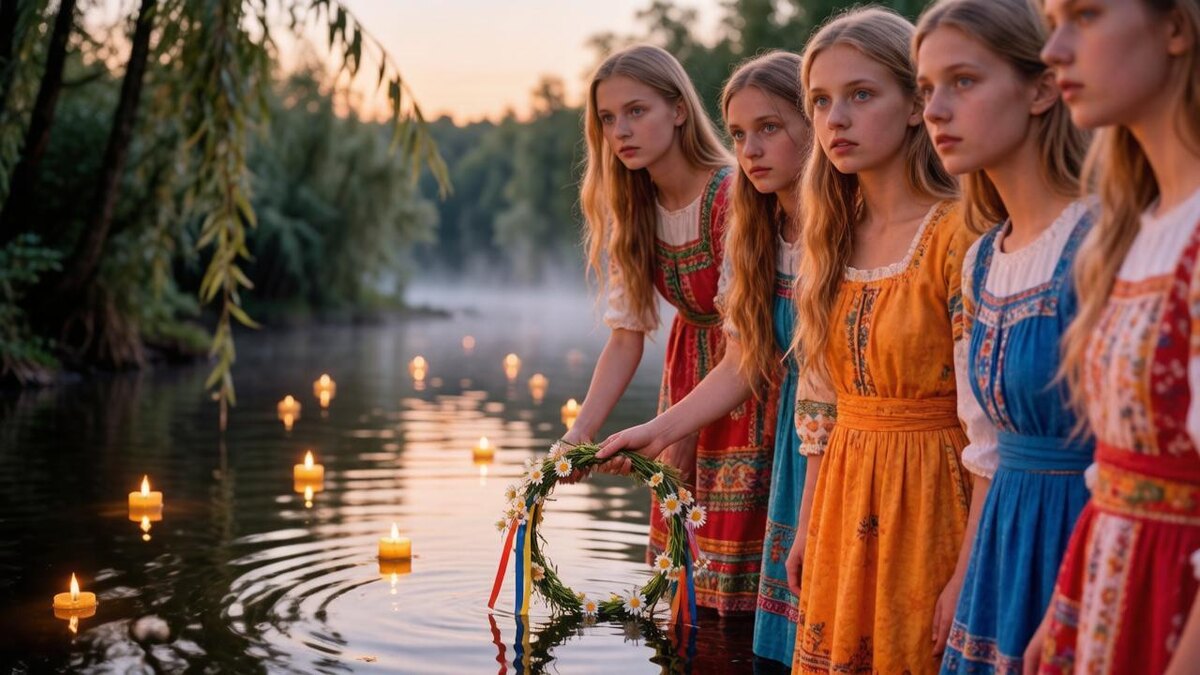
Historically, the holiday fell on the time of the summer solstice, the period of the highest flowering of nature. Later, the church timed the celebration of the Nativity of John the Baptist to this date. According to one version, the very name "Kupala" is associated with the ancient rite of immersion in water during baptism. That is why pagan and Christian ideas are closely intertwined in the folk tradition.
Medicinal herbs were collected on Kupala night, wreaths were woven, fortune-telling and dances were performed. It was believed that it was at this time that plants had special powers, and dreams could turn out to be prophetic. Today, these traditions have been preserved more as cultural symbols than as part of everyday life. The magical significance of traditions has almost been lost: fortune-telling is perceived as part of the festive atmosphere, and collecting herbs has a practical rather than a sacred meaning.
The modern celebration of Ivan Kupala is significantly different from how our ancestors imagined it. People's worldviews, religious beliefs, and way of life have changed. Many traditions no longer exist as obligatory rituals, but as a way to touch the history of their people and feel connected to their cultural heritage.
"All these traditions are known to us today, but all of them have lost their magical significance and their original ritual and ceremonial function. Nowadays, few people believe in fortune-telling, it is perceived more as fun, collecting herbs has a pragmatic meaning," Irina Zabubenina said.
Young people are showing a special interest in the holiday today. According to the expert, this is quite natural. Young people have always strived for vivid impressions, new acquaintances and communication. Several centuries ago, it was during the Kupala festivities that young people could get to know each other, express themselves in dances, songs and various competitions. Today, this need persists, but is complemented by a sincere interest in the history of Russia and its own culture.
Social media enhances interest. They become a platform where traditional culture gets a new form of existence. Folk costumes, music, dancing, and stylized photo shoots help draw attention to cultural heritage, especially among young people.
The transformation of national holidays into popular online content does not necessarily mean that they lose their value. If you are genuinely interested in traditional culture, posting on social media can help promote it. At the same time, museums, ethnographic complexes, public organizations and educational institutions that preserve cultural heritage continue to play an important role.
Modern Ivan Kupala festivals can no longer be called an accurate reproduction of the ancient holiday. Rather, it is a new cultural phenomenon in which tradition meets modernity. Historical images receive a new interpretation, keeping in touch with the past and at the same time becoming part of modern culture.
"This is both a continuation of tradition and a new phenomenon. Rather, modern celebrations can be called a synthetic phenomenon," Irina Zabubenina said.
In the future, the expert is sure that folk traditions will continue to develop together with society. They will inevitably change under the influence of digital technologies, but their importance will not disappear. As long as there is interest in the history of their country, respect for cultural heritage and a desire to pass it on to the next generations, traditions will live on, acquiring new forms and meanings.
Short link to this page sfedu.ru/news/80980


